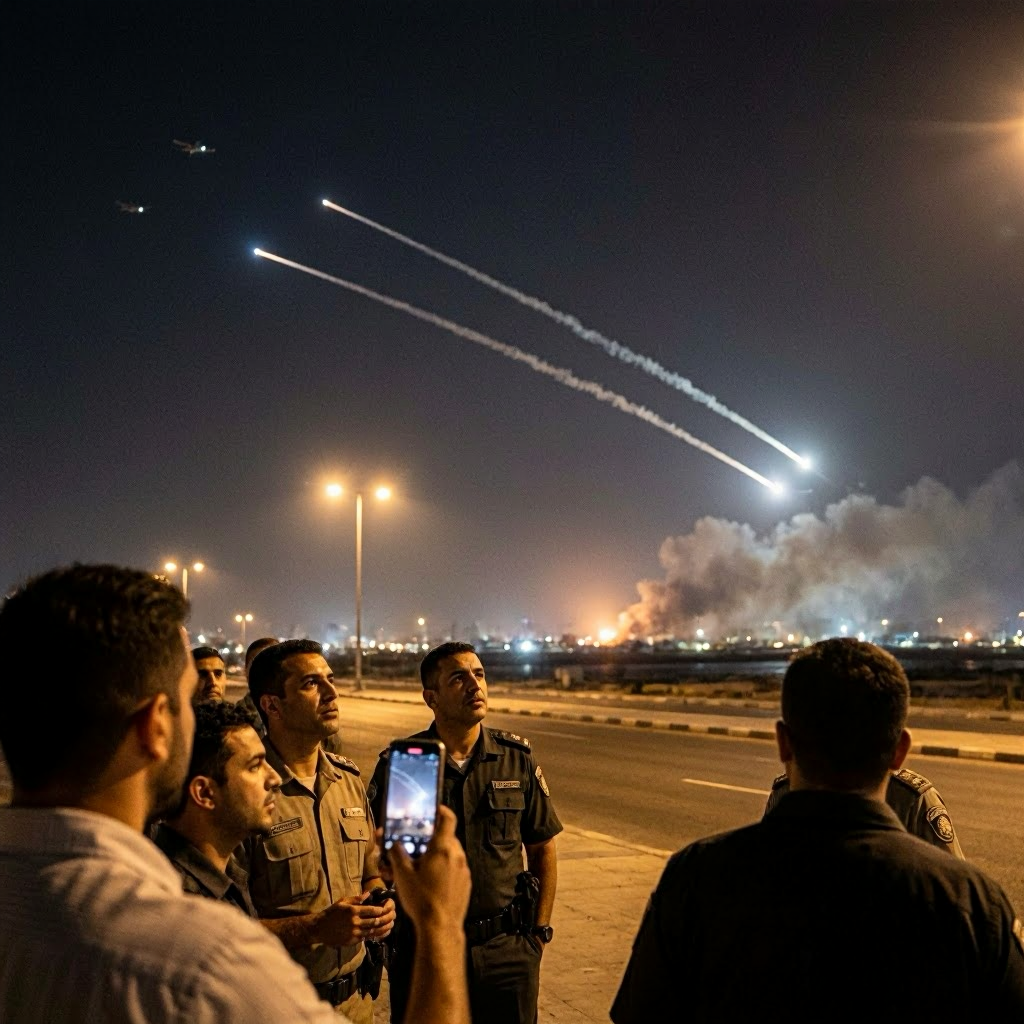
DUBAI, United Arab Emirates — In a dramatic escalation of tensions in the Persian Gulf, the United States launched airstrikes against Iranian military installations early Thursday. This action was a direct response to recent Iranian attacks on commercial shipping vessels in the crucial Strait of Hormuz, a vital artery for global oil shipping.
The airstrikes, which occurred shortly after President Donald Trump declared the ceasefire with Iran effectively over, targeted a range of military sites and port facilities believed to be linked to Iran's aggressive maritime actions. Sources indicate that multiple sites were struck, causing significant damage and raising concerns about further escalation.
In retaliation, the Iranian government has targeted Gulf states, specifically Bahrain, Kuwait, and Qatar, indicating a strategy to widen the conflict beyond its borders. Analysts warn that this could lead to a broader regional confrontation, as these nations have historically aligned with U.S. interests in the Middle East.
President Trump, in a press briefing, stated, "We will not tolerate attacks on our allies or our interests. This response is necessary to ensure the security of international shipping lanes and to deter further Iranian aggression." His administration has faced criticism for its handling of the situation, with some arguing that the airstrikes could exacerbate tensions rather than resolve them.
The recent Iranian assaults on vessels near Oman have underscored the fragility of the existing ceasefire, which had provided a temporary lull in hostilities. The U.S. strikes were characterized as a preventative measure aimed at disrupting Iran's capacity to execute further attacks.
International reactions have been mixed, with some nations calling for restraint from both parties, while others support the U.S. actions as justified self-defense. Diplomatic efforts to mediate a long-term resolution to the conflict are currently at a standstill, with both sides showing little willingness to compromise.
As the situation unfolds, the potential for further military engagement looms large. Experts emphasize the importance of dialogue to de-escalate the conflict, urging the parties involved to reconsider their current hardline stances.