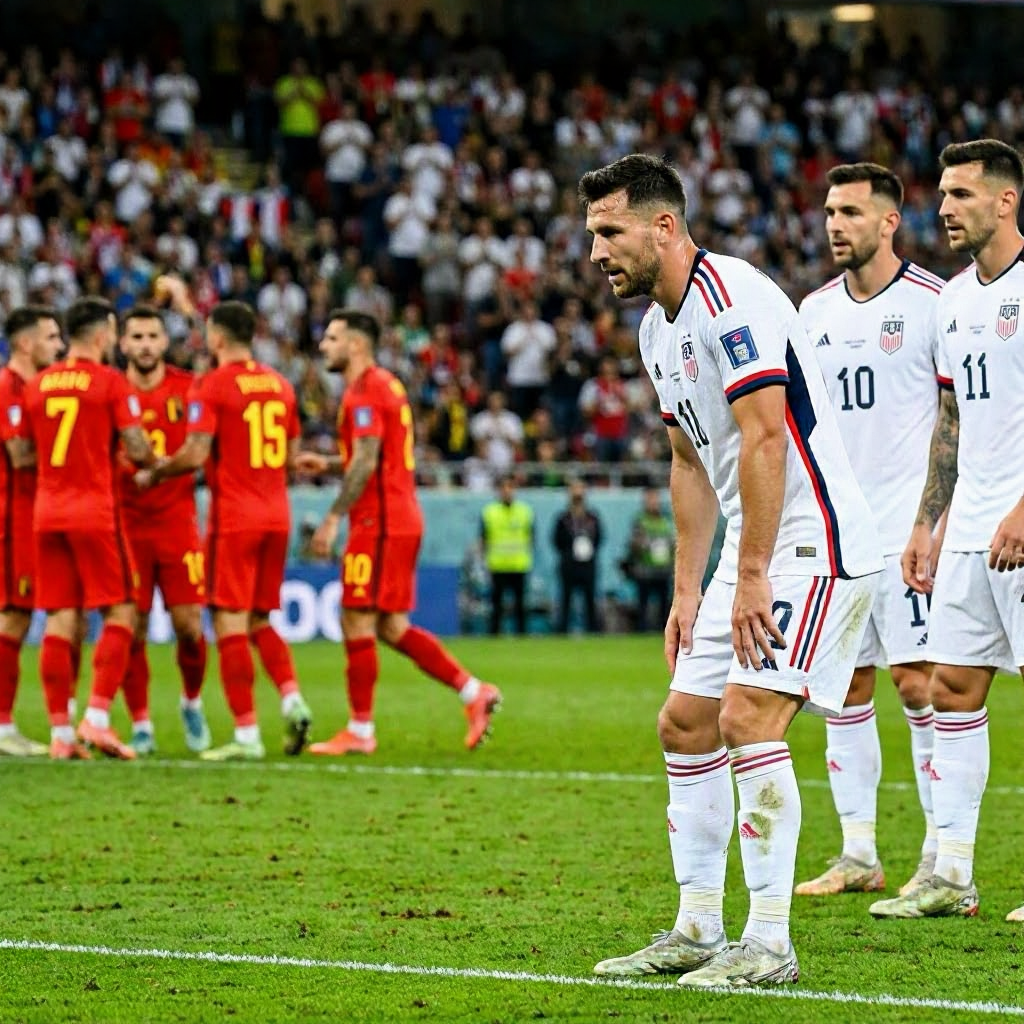
The U.S. men's national soccer team saw their World Cup hopes dashed in the Round of 16, as they succumbed to a decisive 4-1 defeat against Belgium. Despite entering the match at what was believed to be full strength, the American squad struggled to keep pace with their European rivals, who showcased superior skill and teamwork.
The match was not just a test of athleticism but also of mental fortitude, as the U.S. was embroiled in controversy prior to the game. Reports surfaced of a phone call from President Trump to FIFA's leadership, questioning a red card issued to U.S. striker, which added pressure to an already challenging situation for the team. However, the players emphasized the need to focus on the game itself, downplaying the political ramifications.
Belgium took an early lead, striking first with a goal that set the tone for the match. The U.S. struggled to respond effectively to Belgium's offensive maneuvers, finding it difficult to penetrate the well-organized defense and create scoring opportunities. Despite a valiant effort, the American team was unable to convert their chances into goals.
In the second half, the U.S. managed to find the back of the net, sparking a brief surge of hope among fans. However, Belgium quickly extinguished this momentum by scoring again, showcasing their ability to capitalize on mistakes and maintain their dominance.
The defeat marks the end of a significant chapter for the U.S. men's national team, who had aimed to make a deeper run in the tournament. Coach and players alike expressed their disappointment but also their pride in how far the team had come, highlighting the experience gained during the competition.
As the tournament concludes for the U.S., discussions will inevitably turn to the future of the program and the steps needed to elevate the team's competitiveness on the world stage. Fans remain hopeful that this setback will serve as a catalyst for growth and improvement in the years to come.