politics
Top Iranian Leaders Mourn as Ayatollah Khamenei's Funeral Begins
The funeral of former Supreme Leader Ayatollah Ali Khamenei commenced amid emotional tributes from top Iranian officials, including Speaker Ghalibaf. The week-long mourning period follows Khamenei's death in a tragic incident involving US-Israeli strikes.
Sara Jahanpour
July 04, 2026
03:59 PM
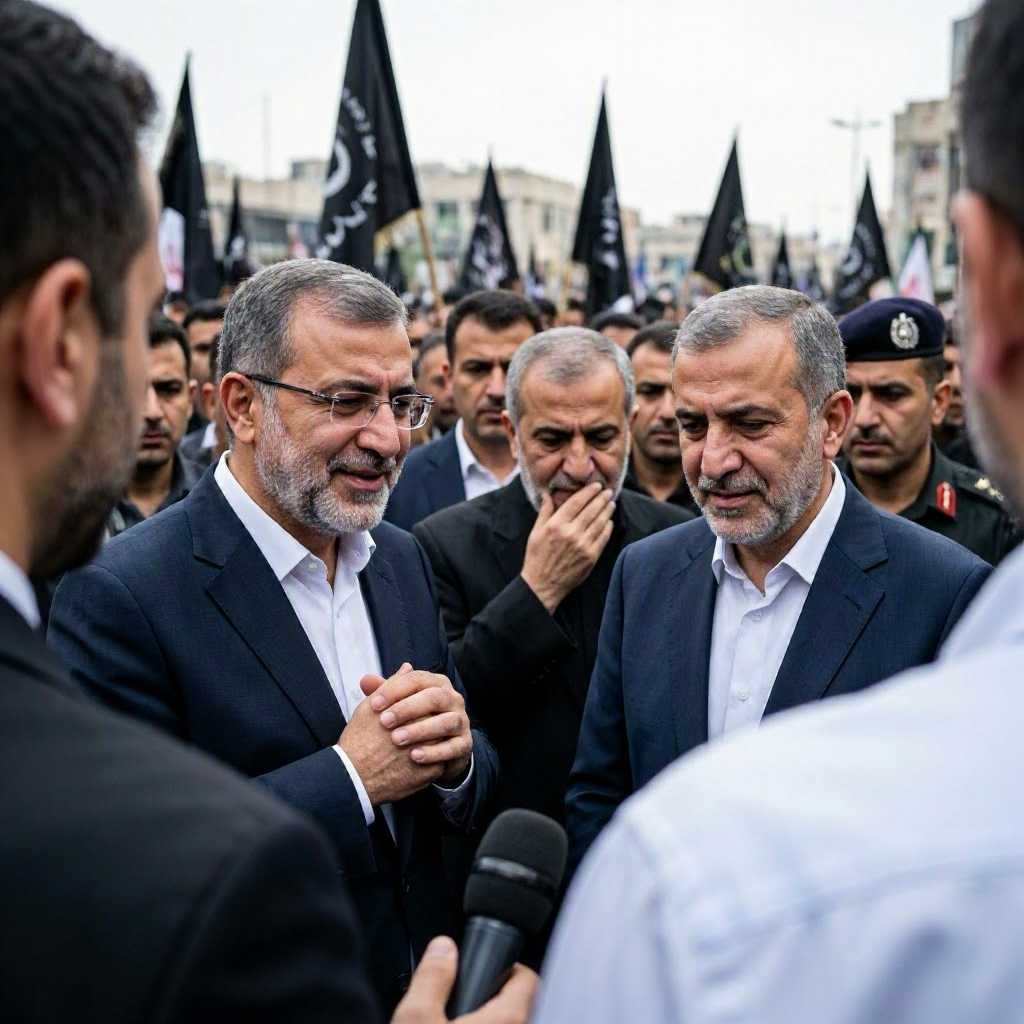
The Iranian political landscape has been shaken as senior leaders gathered in Tehran to commence a week-long mourning period for the late Ayatollah Ali Khamenei, who was killed in a recent military strike on February 28. The solemn farewell ceremony took place at the Grand Mosalla, drawing a significant crowd of officials and citizens alike.
During the proceedings, emotions ran high as parliamentary Speaker Mohammad Bagher Ghalibaf was seen visibly crying, reflecting the profound sense of loss felt across the nation. Foreign Minister Abbas Araghchi, standing alongside Ghalibaf, also displayed his sorrow, further emphasizing the impact of Khamenei's passing on Iran's leadership.
Press TV reported that the ceremony was attended by numerous dignitaries and political figures, each paying their respects to the former Supreme Leader. Khamenei's leadership, which spanned several decades, played a critical role in shaping Iran's domestic and foreign policies, underlining the significance of his death in Iranian history.
As the nation enters this mourning period, public sentiment is expected to mirror the grief exhibited by its leaders. Citizens have begun gathering at various memorial sites across the capital to honor Khamenei's legacy, showcasing a united front in remembrance during this challenging time.
In a statement reflecting on Khamenei's contributions, Ghalibaf remarked, "His leadership was a beacon for many, and his vision for Iran will continue to inspire future generations." Such sentiments are echoed by many who mourn not only the loss of a leader but the potential changes in Iran's political direction.
The ceremonies are set to continue throughout the week, with additional events commemorating Khamenei's life and leadership planned across the country. As the nation collectively processes this loss, the future of Iran's political landscape remains uncertain, with many looking to the remaining leadership for guidance.
ईरान की राजनीति में बड़ा झटका लगा है। वरिष्ठ नेता तेहरान में जुटे, जहां 28 फरवरी को हुए हालिया सैन्य हमले में मारे गए पूर्व सर्वोच्च नेता अयातुल्ला अली खामेनेई के लिए एक सप्ताह के शोक की औपचारिक शुरुआत की गई। ग्रैंड मोसल्ला में आयोजित विदाई समारोह में बड़ी संख्या में अधिकारी और आम नागरिक पहुंचे।
कार्यक्रम के दौरान माहौल बेहद भावुक रहा। संसद अध्यक्ष मोहम्मद बाघेर ग़ालीबाफ को सार्वजनिक रूप से रोते हुए देखा गया, जो देशभर में महसूस किए जा रहे गहरे शोक को दर्शाता है। उनके साथ खड़े विदेश मंत्री अब्बास अराघची भी गमगीन नजर आए, जिससे ईरानी नेतृत्व पर खामेनेई के निधन के असर की गंभीरता और स्पष्ट हुई।
प्रेस टीवी के मुताबिक, समारोह में कई गणमान्य व्यक्ति और राजनीतिक हस्तियां शामिल हुईं और सभी ने पूर्व सर्वोच्च नेता को श्रद्धांजलि अर्पित की। दशकों तक चले खामेनेई के नेतृत्व ने ईरान की घरेलू और विदेश नीति को आकार देने में अहम भूमिका निभाई, इसलिए उनका निधन ईरानी इतिहास में एक महत्वपूर्ण मोड़ माना जा रहा है।
शोक अवधि के दौरान जनभावना भी नेताओं के दिखाए गए दुख की तरह ही रहने की उम्मीद है। राजधानी में विभिन्न स्मृति स्थलों पर लोग खामेनेई की विरासत को सम्मान देने के लिए जुटने लगे हैं, और इस कठिन समय में एकजुट होकर उन्हें याद कर रहे हैं।
खामेनेई के योगदान को याद करते हुए ग़ालीबाफ ने कहा, “उनका नेतृत्व अनेक लोगों के लिए प्रकाशस्तंभ था, और ईरान के लिए उनका दृष्टिकोण आने वाली पीढ़ियों को प्रेरित करता रहेगा।” ऐसे विचार उन तमाम लोगों की भावनाओं को भी प्रतिबिंबित करते हैं, जो सिर्फ एक नेता के जाने का नहीं, बल्कि ईरान की राजनीतिक दिशा में संभावित बदलावों का भी शोक मना रहे हैं।
ये कार्यक्रम पूरे सप्ताह जारी रहेंगे और देशभर में खामेनेई के जीवन व नेतृत्व को समर्पित अतिरिक्त आयोजन भी प्रस्तावित हैं। जैसे-जैसे देश इस क्षति को सामूहिक रूप से स्वीकार कर रहा है, ईरान के राजनीतिक परिदृश्य का भविष्य अनिश्चित बना हुआ है और कई निगाहें शेष नेतृत्व से मार्गदर्शन की उम्मीद लगाए हुए हैं।