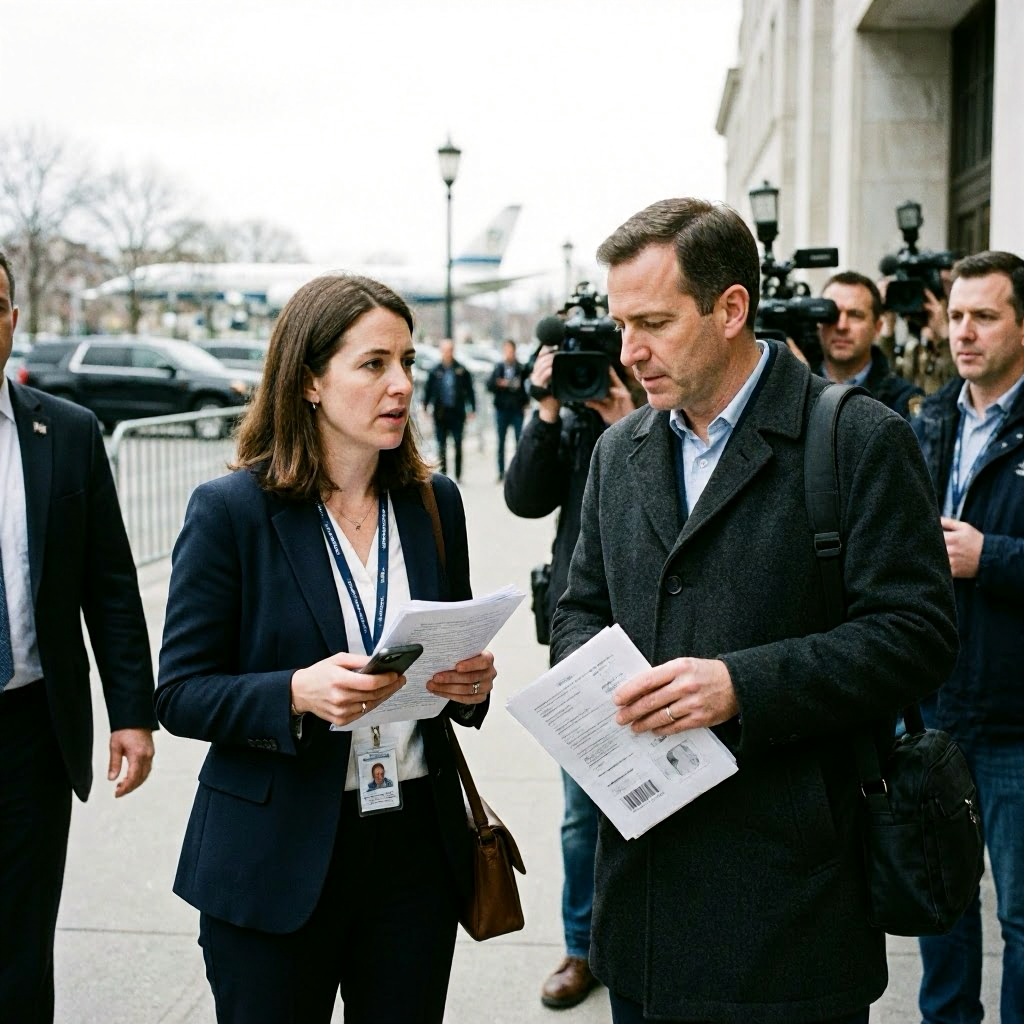
In a surprising development, the Trump administration has issued subpoenas to multiple reporters from the New York Times in response to a recent report highlighting security concerns associated with the newly introduced Air Force One jet. This incident underscores ongoing tensions between the administration and the press, particularly over matters of national security.
The New York Times reported that the new Air Force One, recently gifted to President Donald Trump by Qatar, officially entered service just last week. The report raised important questions regarding the aircraft's security measures, attracting significant media attention and public interest.
Federal agents reportedly delivered some of the subpoenas directly to the reporters' homes, a tactic that many see as an aggressive move aimed at intimidating journalists. According to the Times, the subpoenas request the journalists to testify at a federal grand jury in Manhattan scheduled for Wednesday.
While details of the federal inquiry remain largely under wraps, the NYT's report has not been independently verified, leading to questions about the potential motivations behind the subpoenas. Critics argue that such actions may undermine press freedom and the ability of journalists to investigate and report on government operations without fear of reprisal.
The issuance of these subpoenas has ignited a debate on the balance between national security and the public's right to know. Advocacy groups and press freedom organizations have expressed concern over the implications of this move, calling it a chilling effect on journalistic practices.
As the situation unfolds, it remains to be seen how the New York Times will respond and whether the administration will be able to justify its actions in the context of protecting national security. The incident has further highlighted the fraught relationship between the Trump administration and the media, a dynamic that continues to evolve in today's polarized political climate.