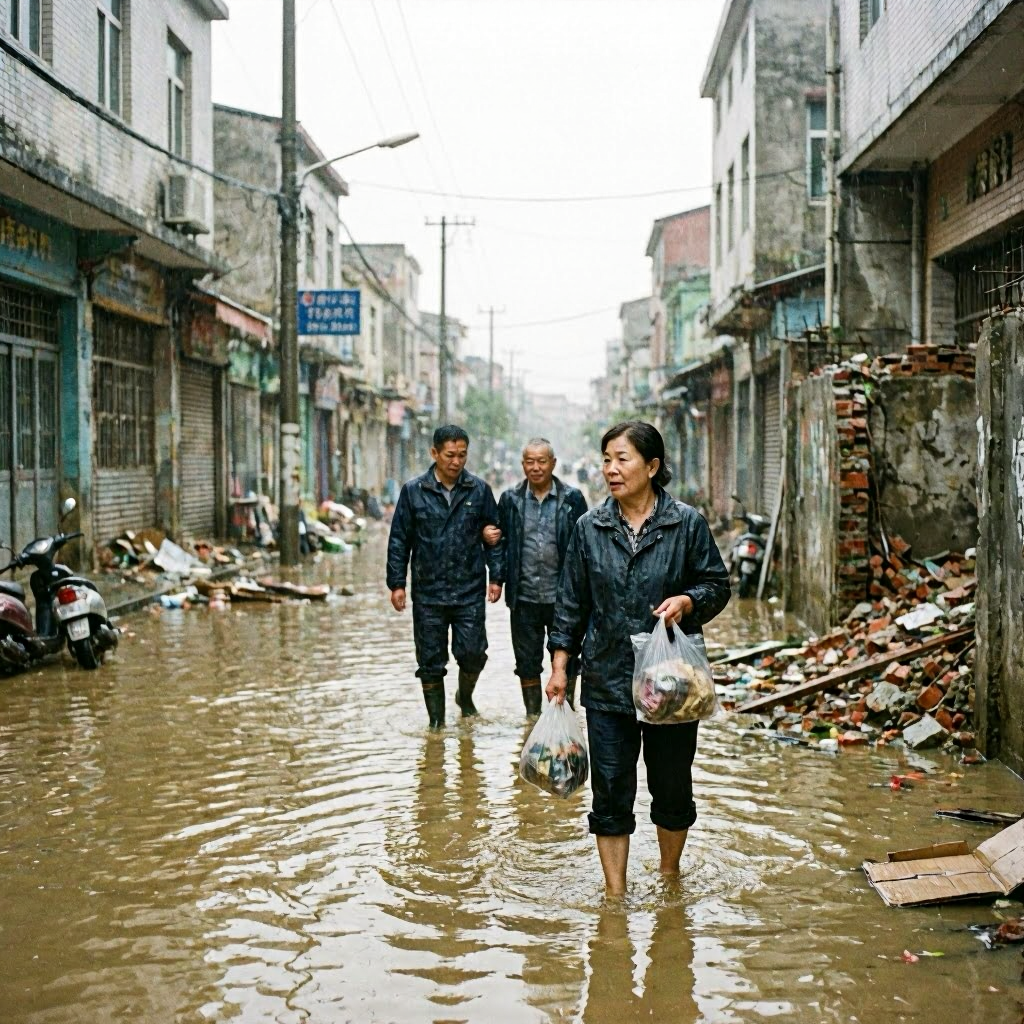
BEIJING — The Guangxi region in southern China is reeling from the aftereffects of unprecedented flooding caused by the remnants of Tropical Storm Maysak. As of Tuesday evening, officials reported six confirmed deaths and eleven individuals still missing, prompting an urgent response from local authorities.
According to the regional propaganda office, approximately 130,000 residents have been forced to evacuate their homes as relentless rain inundated the area. The heavy rainfall, which broke records for the region, has led to widespread destruction, particularly in low-lying neighborhoods.
Residents are still grappling with the crisis, with many waiting for rescue. Lu Xiaofei, a Shenzhen resident, expressed concern for her brother’s family, who remain trapped in their home in Lu village, located in the Qintang district. "Their home is surrounded by water, and they haven’t been able to leave for days," she said, reflecting the fears of many affected families in the region.
The local government is coordinating rescue operations, but the sheer scale of the flooding has complicated efforts. Emergency services are working tirelessly to reach those in distress, but access to some areas remains severely restricted due to rising water levels and debris.
Communities are facing not only immediate dangers but also the long-term implications of the disaster. Infrastructure damage is extensive, with roads and bridges washed away, complicating transportation and supply routes for aid. As recovery efforts ramp up, local officials are assessing the full extent of the damage and planning for reconstruction.
This catastrophic weather event raises questions about climate resilience in the region, as experts highlight the increasing frequency of severe weather patterns linked to climate change. Authorities are urged to implement better infrastructure and emergency response strategies to mitigate the impacts of future storms.