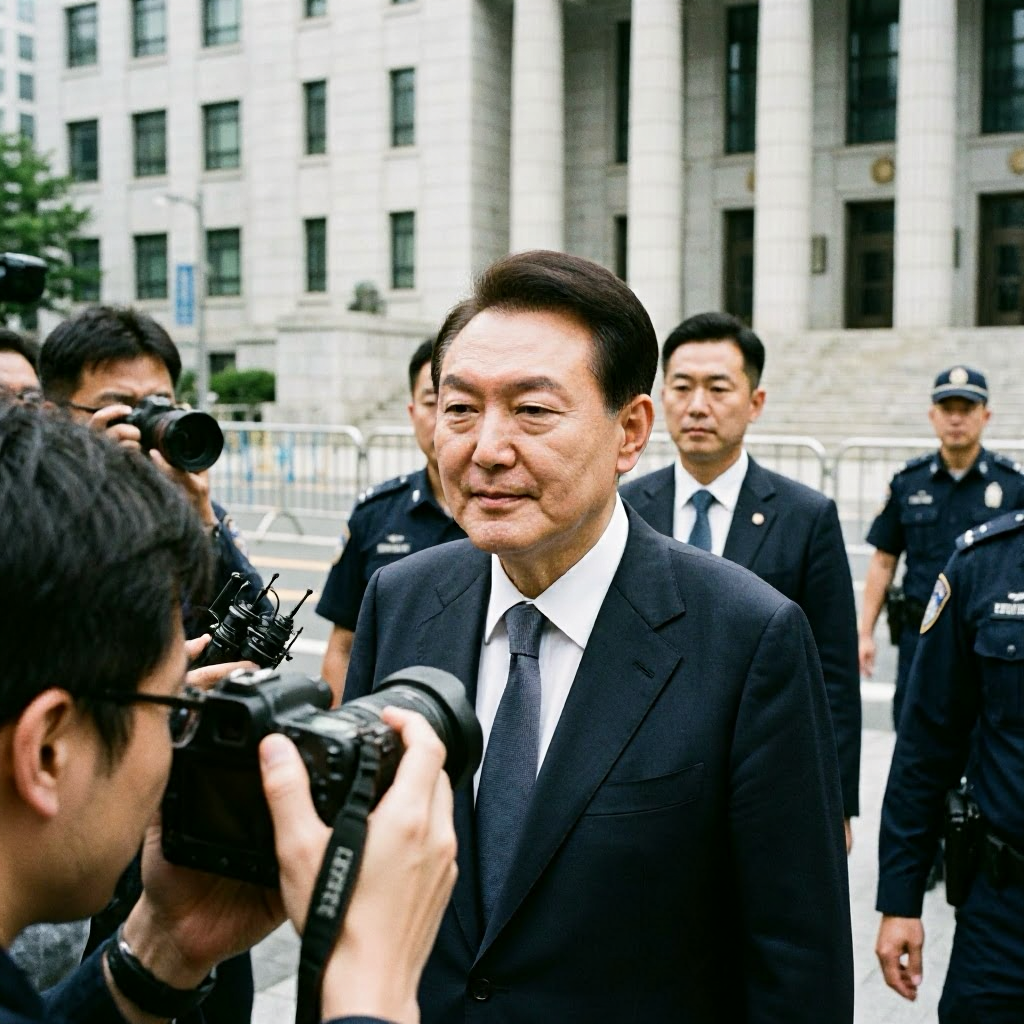
SEOUL, South Korea — In a decisive ruling that reverberates throughout the nation, South Korea’s Supreme Court upheld a seven-year prison sentence for former President Yoon Suk Yeol on Thursday. This ruling marks a pivotal moment in South Korea's political landscape, as it is the first case from Yoon's multiple criminal trials to reach the highest court.
The Supreme Court's decision supports an earlier judgment by the Seoul High Court, which found Yoon guilty of serious violations of governmental protocol during his brief imposition of martial law in 2024. Specifically, the court ruled that Yoon infringed upon the rights of his Cabinet members by failing to allow adequate deliberation before declaring martial law.
In addition to the infringement on Cabinet rights, Yoon was also found guilty of falsifying the official proclamation regarding the martial law declaration. The court determined that he had sought to cover up procedural lapses by destroying the original document, actions that were deemed both illegal and unethical.
The ruling has sparked a flurry of reactions across the political spectrum in South Korea. Advocates for accountability praised the Supreme Court's decision, viewing it as a necessary step in upholding democratic principles. Conversely, Yoon's supporters have expressed outrage, arguing that the legal proceedings were politically motivated.
This ruling not only affects Yoon's political future but also sets a precedent for how former leaders are held accountable for their actions while in office. Legal experts suggest that this case may influence future political dynamics in South Korea, as it highlights the judiciary's role in checking executive power.
As the implications of the Supreme Court's ruling unfold, the South Korean public remains divided. Opinion polls indicate a significant portion of the electorate is concerned about the integrity of the political system, reflecting a broader desire for transparency and accountability in governance.
Yoon's legal team has indicated plans to appeal the ruling, suggesting that this saga may not yet be over. As the situation develops, many are watching closely to see how this case will impact South Korea's political landscape in the coming years.