Politics
Lok Adalat in Mathura Addresses Shri Krishna Janmabhoomi-Shahi Idgah Dispute
A Lok Adalat hearing was conducted in Mathura following Supreme Court directives regarding the Shri Krishna Janmabhoomi-Shahi Idgah case. A Hindu plaintiff has proposed the removal of the disputed structure, signaling a potential shift in the legal battle surrounding this historic site.
Meera Sharma
July 06, 2026
12:07 AM
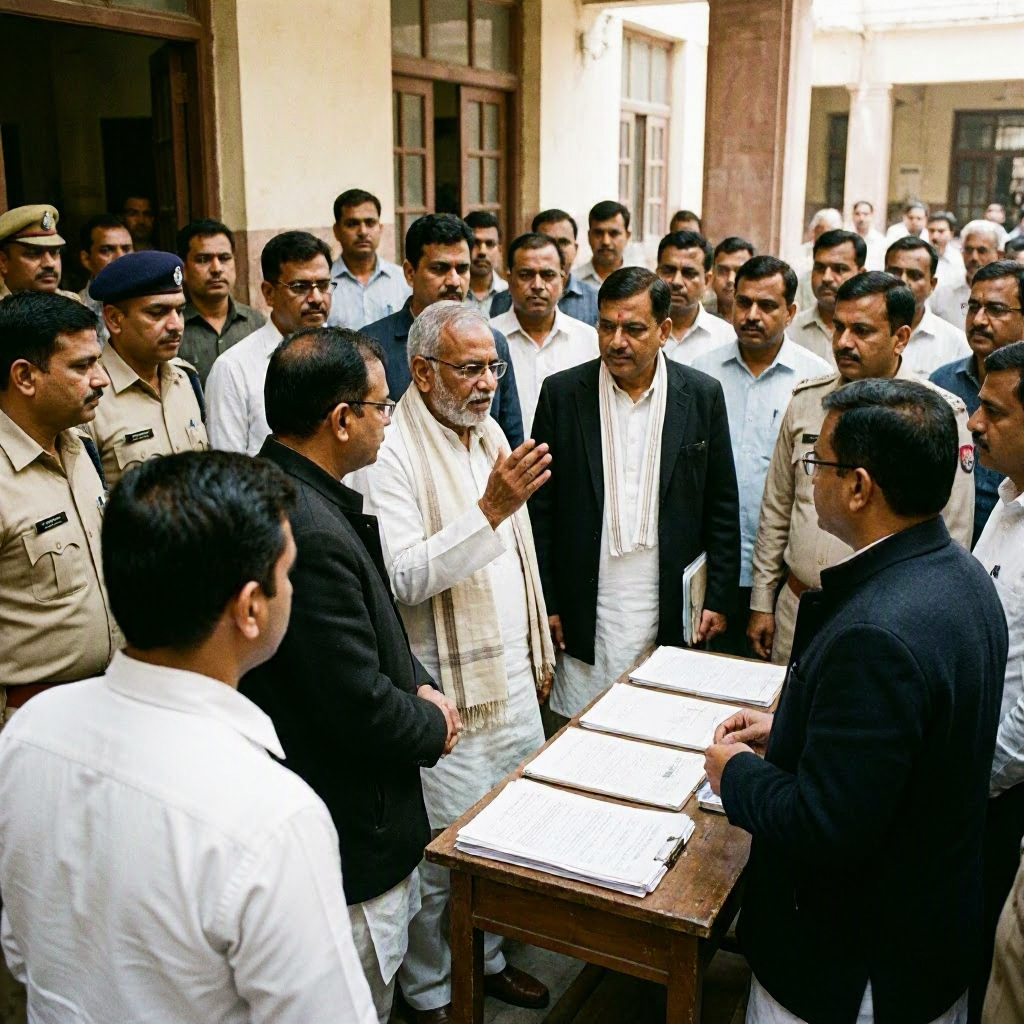
A special Lok Adalat session was held in Mathura as part of the ongoing legal proceedings surrounding the Shri Krishna Janmabhoomi-Shahi Idgah Mosque dispute. This session was prompted by directives from the Supreme Court of India, which is scrutinizing Special Leave Petitions (SLPs) related to this contentious issue.
The Lok Adalat served as a platform for both parties to present their arguments, aiming to facilitate an amicable resolution to the dispute that has lingered for decades. The case centers on a site believed by many Hindus to be the birthplace of Lord Krishna, which currently houses the Shahi Idgah Mosque.
During the proceedings, a Hindu plaintiff proposed the removal of the mosque structure from the disputed site, a move that could significantly escalate tensions in the already fraught atmosphere surrounding the case. This proposal reflects the sentiments of many in the Hindu community, who see the site as sacred.
The Supreme Court's involvement has underscored the legal complexities surrounding religious sites in India, where historical claims and contemporary legal frameworks often intersect. The ongoing litigation highlights the delicate balance between religious sentiments and judicial processes.
Legal experts attending the Lok Adalat noted the importance of mediation in resolving such disputes amicably. They emphasized that while the law provides a framework for resolution, the emotional and historical connotations of such cases require sensitive handling to prevent community unrest.
The outcome of this Lok Adalat session could have far-reaching implications for similar disputes across the country. Many are watching closely to see if a resolution can be achieved that respects the sentiments of both communities involved.
As the case progresses, stakeholders from both sides remain committed to seeking a resolution that honors their respective beliefs, while also adhering to the rule of law set forth by the Indian judiciary.
श्रीकृष्ण जन्मभूमि-शाही ईदगाह मस्जिद विवाद से जुड़े लंबित कानूनी मामलों के तहत मथुरा में विशेष लोक अदालत सत्र आयोजित किया गया। यह सत्र भारत के सुप्रीम कोर्ट के निर्देशों के बाद हुआ, जहां इस विवाद से संबंधित विशेष अनुमति याचिकाओं (एसएलपी) पर विचार किया जा रहा है।
लोक अदालत में दोनों पक्षों को अपनी दलीलें रखने का अवसर मिला और उद्देश्य दशकों से चले आ रहे विवाद का आपसी सहमति से समाधान तलाशना रहा। मामला उस स्थल से जुड़ा है जिसे अनेक हिंदू भगवान कृष्ण का जन्मस्थान मानते हैं, जबकि वर्तमान में वहां शाही ईदगाह मस्जिद स्थित है।
कार्यवाही के दौरान एक हिंदू वादी ने विवादित स्थल से मस्जिद के ढांचे को हटाने का प्रस्ताव रखा। इस कदम को मामले के पहले से संवेदनशील माहौल में तनाव बढ़ाने वाला माना जा रहा है। प्रस्ताव हिंदू समुदाय के एक वर्ग की उस भावना को भी दर्शाता है, जो इस स्थल को पवित्र मानता है।
सुप्रीम कोर्ट की सक्रिय भूमिका ने भारत में धार्मिक स्थलों से जुड़े विवादों की कानूनी जटिलताओं को रेखांकित किया है, जहां ऐतिहासिक दावे और मौजूदा कानूनी ढांचे अक्सर एक-दूसरे से टकराते हैं। जारी मुकदमेबाजी धार्मिक भावनाओं और न्यायिक प्रक्रिया के बीच संतुलन की चुनौती को सामने लाती है।
लोक अदालत में मौजूद कानूनी विशेषज्ञों ने ऐसे मामलों में मध्यस्थता की भूमिका को अहम बताया। उनका कहना था कि कानून समाधान का ढांचा तो देता है, लेकिन इन विवादों से जुड़ी भावनात्मक और ऐतिहासिक परतों को देखते हुए संवेदनशील तरीके से आगे बढ़ना जरूरी है, ताकि सामुदायिक तनाव न बढ़े।
इस लोक अदालत सत्र का परिणाम देशभर में इसी तरह के अन्य विवादों पर भी दूरगामी असर डाल सकता है। कई लोग इस पर नजर बनाए हुए हैं कि क्या दोनों समुदायों की भावनाओं का सम्मान करते हुए कोई स्वीकार्य समाधान निकल पाता है।
मामला आगे बढ़ने के साथ दोनों पक्षों के हितधारक अपने-अपने विश्वासों के अनुरूप समाधान की कोशिश जारी रखने की बात कह रहे हैं, साथ ही भारतीय न्यायपालिका द्वारा निर्धारित विधि-शासन का पालन करने पर भी जोर दे रहे हैं।