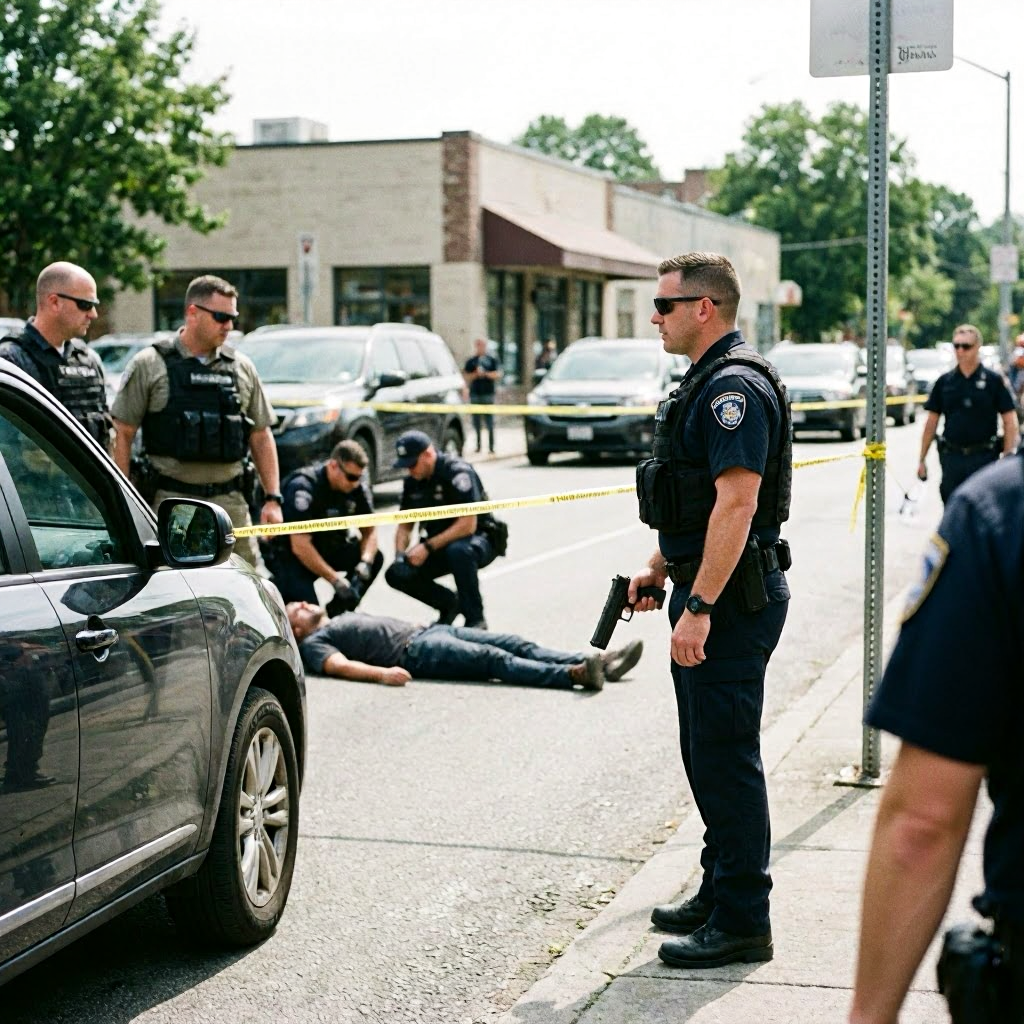
A routine operation conducted by U.S. Immigration and Customs Enforcement (ICE) in Houston turned deadly on Tuesday when an officer fatally shot a man attempting to evade arrest. The incident occurred as part of a broader enforcement effort targeting individuals living in the U.S. without legal permission.
According to a statement released by the Department of Homeland Security, the man, a Mexican national, ignored multiple commands to stop and ultimately drove his vehicle toward an ICE agent. In response to what was perceived as an imminent threat, the agent discharged his weapon, resulting in the man's death.
Authorities confirmed that the operation aimed to apprehend individuals who were unlawfully residing in the country. The targeted individual was already on law enforcement's radar, contributing to the heightened urgency of the situation. The department indicated that the man’s vehicle struck an ICE vehicle during the encounter, further escalating the confrontation.
The incident has raised questions about the use of force by federal agents during immigration enforcement operations. Critics argue that the situations often escalate quickly and demand careful scrutiny of the protocols in place to protect both officers and individuals involved.
Local community leaders have expressed concern over the rising tensions surrounding immigration enforcement actions. They stress the need for transparency and accountability in cases involving lethal force, particularly in vulnerable communities.
ICE has stated that it is cooperating with an ongoing investigation into the shooting, which is standard procedure in incidents involving the use of deadly force. The agency has pledged to review the circumstances surrounding Tuesday's events as part of its commitment to accountability.
As the investigation unfolds, advocates for immigration reform call for a reassessment of enforcement tactics and greater protections for individuals during such operations. The case highlights the complex dynamics of immigration enforcement in the United States and the challenges faced by both law enforcement and community members.