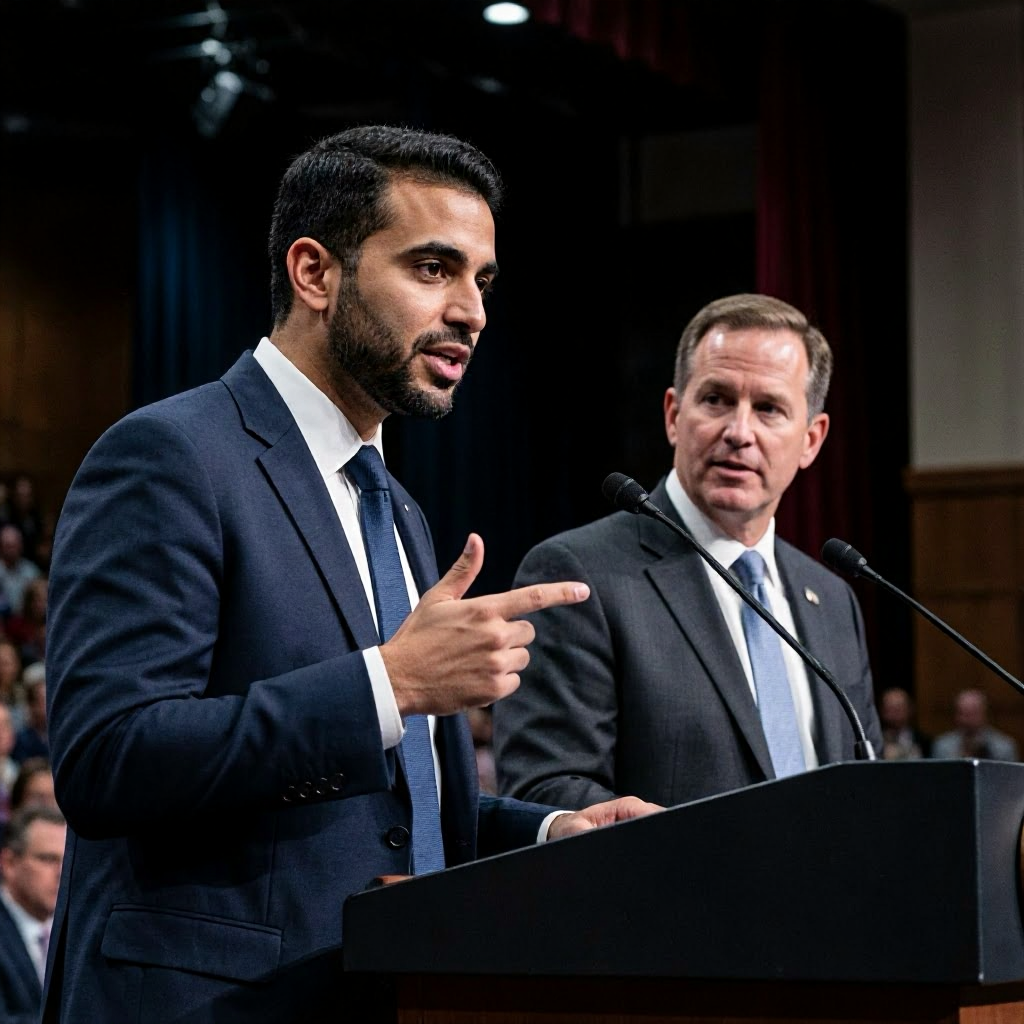
In a lively exchange during their third debate held on July 7, former Wayne County health director Abdul El-Sayed and U.S. Rep. Haley Stevens engaged in a series of pointed confrontations as they vie for the Democratic nomination for Michigan's open U.S. Senate seat. The hour-long debate, hosted by WOOD-TV8 in Grand Rapids and broadcast statewide, showcased a marked increase in direct challenges compared to earlier forums.
With just four weeks remaining before the pivotal August 4 primary, both candidates seized the opportunity to scrutinize each other's records and proposals. El-Sayed questioned Stevens' transparency with voters, suggesting that her political experience has not translated into clear communication about her plans for the state. “Voters deserve to know where their representatives stand on key issues,” El-Sayed stated, urging for a more open dialogue.
On the other hand, Stevens countered by highlighting her practical experience in Congress and her proven track record of delivering results. She accused El-Sayed of being out of touch with the realities faced by many Michigan residents. “We need a senator who can bring people together and make real change happen, not just rhetoric,” Stevens asserted, emphasizing her focus on unifying initiatives.
The debate also touched on critical issues such as healthcare, economic recovery, and climate change. El-Sayed, a progressive voice, championed a bold healthcare reform plan, insisting that it is essential for Michigan to lead in innovative public health strategies. Meanwhile, Stevens presented her own comprehensive approach that aims to balance economic growth with environmental sustainability.
As tensions flared, both candidates displayed contrasting styles; El-Sayed's passionate delivery resonated with a segment of the audience seeking transformative change, while Stevens' pragmatism appealed to voters prioritizing experience and effectiveness. The dynamic interplay highlighted the ideological rifts within the party as they both strive to galvanize support leading up to the primary.
With state Sen. Mallory McMorrow also in the race, the competition is heating up as Democratic contenders work to solidify their bases. The debate illustrated the high stakes involved, as each candidate not only strives for victory but also seeks to define their political identity in a rapidly evolving electoral landscape.
As voters prepare for the upcoming primary, the debate has undoubtedly intensified the scrutiny on both El-Sayed and Stevens, setting the stage for a fiercely contested election that could reshape Michigan's political future.