sports
Croatia's Last-Minute Equaliser Against Portugal Disallowed by VAR
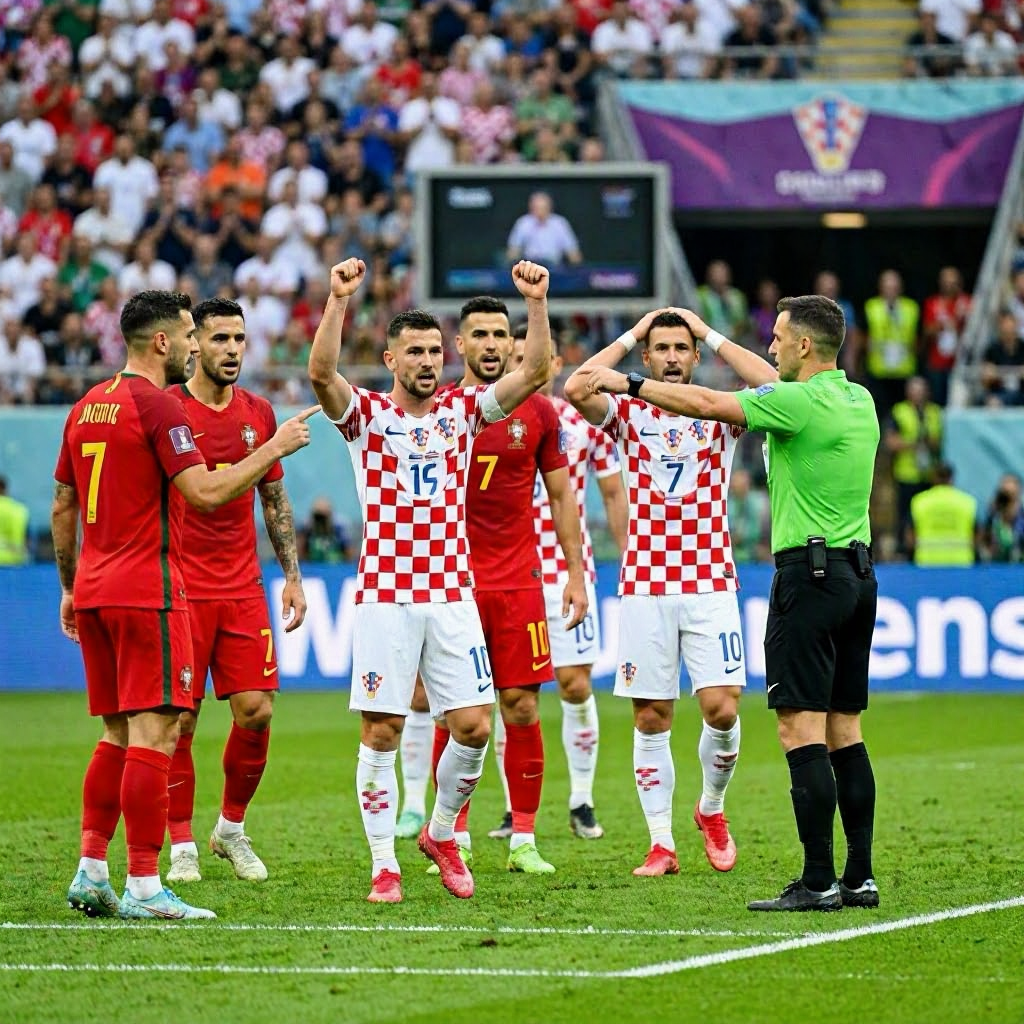
In a dramatic finish to the FIFA World Cup 2026 match, Croatia's 103rd-minute equaliser by Josko Gvardiol was ruled out by VAR. The controversial decision left players and fans in disbelief as the match concluded in a tense 2-1 victory for Portugal.
James Thompson
July 04, 2026
05:23 PM
The FIFA World Cup 2026 Round of 32 match between Portugal and Croatia reached a nail-biting climax on Friday, as Croatia appeared to secure a late equaliser. Josko Gvardiol's goal in the 103rd minute, which seemed to have sent the match into extra time, was disallowed after a VAR review, triggering a wave of emotions among players and supporters alike.
Portugal had been leading the match 2-1, courtesy of goals from Bruno Fernandes and Cristiano Ronaldo. Gvardiol's strike, however, brought hope to Croatia, as fans erupted in celebration, believing they had snatched a critical point in the dying moments of the game.
Upon review, VAR officials determined that Gvardiol was marginally offside at the moment the ball was played to him. The decision quickly shifted the atmosphere from jubilation to desolation, as Croatian players stood in disbelief. The disallowed goal is now a focal point of discussion among fans and analysts, with many questioning the VAR's role in the game.
FIFA's implementation of VAR has been a topic of heated debate since its introduction, with critics arguing that it disrupts the flow of matches and often leads to contentious decisions. This incident adds to the ongoing discourse about the fine margins involved in offside calls, where players can be ruled off by mere inches.
In the post-match interview, Croatia's coach expressed his frustration with the decision, stating, “It’s painful to have a moment like that taken away from us. Football should be about celebrating goals, not having them taken away after such a thrilling play.”
Portugal's victory allowed them to advance to the knockout stages of the tournament, leaving Croatia to ponder what could have been. The match has sparked national conversation in Croatia about the impact of technology in sports and the emotional toll of VAR decisions.
As the tournament progresses, teams and fans alike will be keeping a close eye on how VAR continues to shape the outcomes of crucial matches, especially as tensions rise in the knockout phases.
शुक्रवार को फीफा विश्व कप 2026 के राउंड ऑफ 32 में पुर्तगाल और क्रोएशिया के बीच मुकाबला बेहद रोमांचक मोड़ पर पहुंच गया, जब क्रोएशिया ने अंतिम क्षणों में बराबरी का गोल कर लिया था। 103वें मिनट में जोस्को ग्वार्डिओल का गोल, जो मैच को अतिरिक्त समय में ले जाता दिख रहा था, VAR समीक्षा के बाद रद्द कर दिया गया। इस फैसले ने मैदान पर खिलाड़ियों से लेकर स्टैंड्स में बैठे समर्थकों तक, सभी की भावनाओं को झकझोर दिया।
मैच में पुर्तगाल 2-1 से आगे था, जिसमें ब्रूनो फर्नांडिस और क्रिस्टियानो रोनाल्डो के गोल शामिल थे। ऐसे में ग्वार्डिओल की जोरदार फिनिश ने क्रोएशिया को नई उम्मीद दी और प्रशंसक जश्न में झूम उठे, मानो खेल के आखिरी पलों में उन्होंने निर्णायक बराबरी हासिल कर ली हो।
हालांकि VAR जांच के बाद अधिकारियों ने निष्कर्ष निकाला कि गेंद पास किए जाने के क्षण में ग्वार्डिओल मामूली रूप से ऑफसाइड थे। फैसला आते ही माहौल पल भर में बदल गया—खुशी मातम में बदल गई और क्रोएशियाई खिलाड़ी अविश्वास में खड़े रह गए। अब यह रद्द किया गया गोल प्रशंसकों और विश्लेषकों के बीच चर्चा का केंद्र बन गया है, जहां कई लोग खेल में VAR की भूमिका पर सवाल उठा रहे हैं।
VAR को लागू किए जाने के बाद से ही फीफा के इस कदम पर तीखी बहस होती रही है। आलोचकों का कहना है कि इससे मैच की लय टूटती है और कई बार फैसले विवाद का कारण बन जाते हैं। यह घटना ऑफसाइड के बेहद सूक्ष्म अंतर को लेकर जारी बहस को और हवा देती है, जहां कुछ इंच के फर्क पर भी खिलाड़ी को ऑफसाइड करार दिया जा सकता है।
मैच के बाद दिए गए इंटरव्यू में क्रोएशिया के कोच ने फैसले पर नाराजगी जताते हुए कहा, “ऐसे पल का हमसे छिन जाना बेहद तकलीफदेह है। फुटबॉल का मतलब गोल का जश्न मनाना होना चाहिए, न कि इतनी रोमांचक चाल के बाद उसे छीन लेना।”
पुर्तगाल की इस जीत के साथ टीम टूर्नामेंट के नॉकआउट चरण में आगे बढ़ गई, जबकि क्रोएशिया को ‘अगर ऐसा होता तो’ के सवालों के साथ लौटना पड़ा। इस मुकाबले ने क्रोएशिया में खेलों में तकनीक के प्रभाव और VAR फैसलों के भावनात्मक असर को लेकर राष्ट्रीय स्तर पर चर्चा छेड़ दी है।
टूर्नामेंट आगे बढ़ने के साथ टीमों और प्रशंसकों की नजर इस पर टिकी रहेगी कि VAR अहम मुकाबलों के नतीजों को किस तरह प्रभावित करता है, खासकर नॉकआउट चरणों में जब दबाव और तनाव अपने चरम पर होता है।