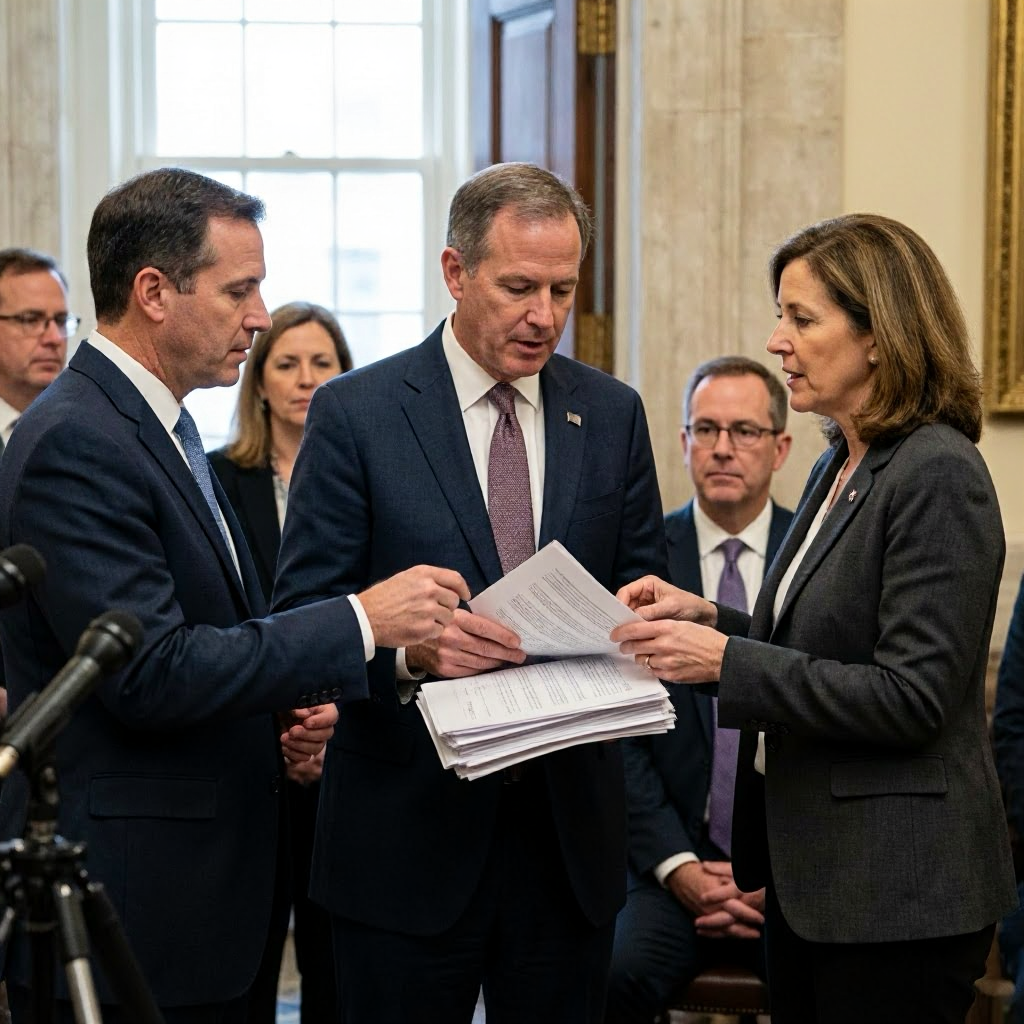
A sweeping bipartisan housing bill, known as the 21st Century ROAD to Housing Act, is set to become law at midnight if President Donald Trump does not issue a veto by the Friday deadline. This legislation, aimed at tackling the prevailing affordability crisis in the housing market, has garnered significant support from both sides of the aisle, passing through Congress with overwhelming margins.
The Senate approved the bill with an 85-5 vote on June 22, reflecting a rare moment of unity in a polarized political environment. The House followed suit shortly after, further solidifying the bipartisan effort to address critical housing issues affecting millions of Americans.
Key provisions of the legislation include measures to increase the availability of affordable housing, streamline zoning regulations, and provide financial assistance for first-time homebuyers. Advocates of the bill argue that these steps are essential to alleviate the mounting pressure on families struggling with housing costs across the country.
Despite the strong support, uncertainty loomed over the bill's fate as the deadline approached. However, with Congress's evident determination and the bill's veto-proof majority, analysts suggest that the legislation will likely take effect, ensuring progress towards alleviating the housing crisis.
In a recent statement, Senator Lisa Murkowski, a key supporter of the bill, remarked, "This legislation represents a crucial step forward in addressing housing affordability. We must ensure that every American has access to safe, affordable housing." As discussions continue, the focus now shifts to implementation and the potential impact on local housing markets.
As the clock ticks down, the expectation is that unless President Trump steps in with a veto, the 21st Century ROAD to Housing Act will officially become law, marking a significant achievement in bipartisan cooperation in Congress.